
1. Introduction
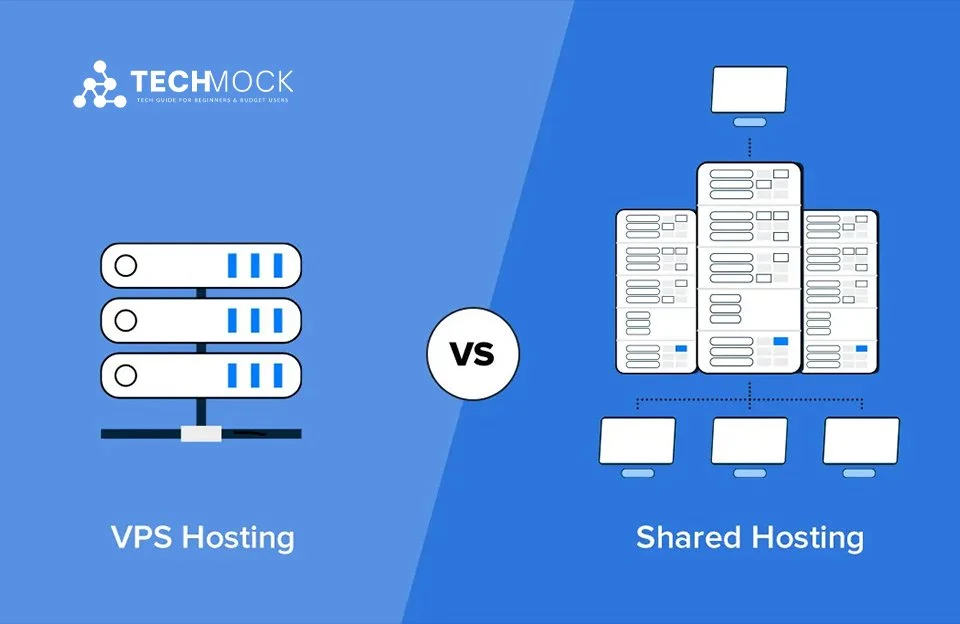
Selecting the right web hosting service is one of the most critical decisions that needs to be made while creating a website for your business in the year 2026. This decision can be quite critical, whether it is a blog, business website, portfolio, or an eCommerce website. In this comprehensive guide on TechMock.net, we will provide information on everything that needs to be known regarding the difference between Shared Hosting and VPS Hosting, the advantages, disadvantages, and which one is better.
1.1 What Is Web Hosting?
Web hosting is a service that allows individuals and businesses to host their websites on the internet. Web hosting providers store your website content, images, databases, and information on powerful servers, which can be easily accessed by users 24/7.
When users type your domain name in the browser, the hosting server will provide your website content immediately.
Some of the best and most reliable web hosting providers are:
These web hosting providers offer different types of hosting services, which are:
- Shared Hosting
- VPS Hosting
- Dedicated Hosting
- Cloud Hosting
- WordPress Hosting
How Web Hosting Works (Simple Explanation)
Many beginners focus only on price when selecting hosting. However, the type of hosting you choose directly affects your website’s long-term success.
Here’s why choosing the right hosting matters:
1. Website Speed
Website speed is a major ranking factor in Google. Slow websites increase bounce rate and reduce conversions. High-performance hosting improves:
- Page loading time
- Core Web Vitals
- User engagement
VPS hosting generally provides better performance compared to shared hosting due to dedicated resources.
2. Security
Security is an important aspect, particularly for:
• eCommerce sites
• For business sites
• Membership sites
Hosting services can affect the security of your site, which might lead to malware, hacking, and data breach issues. A good hosting service provides security by offering:
• SSL certificates
• Firewalls
• Daily backups
• Malware scanning
3. Uptime
The term uptime relates to the number of times your site remains active online. A good hosting service provides an uptime guarantee of 99.9%.
Frequent downtimes might affect your site by damaging your SEO rankings, resulting in loss of sales and damaging the reputation of your brand.
4. SEO Rankings
According to Google, a good site should be fast, secure, and stable. A poor hosting service might affect the SEO rankings of your site. If your site takes too long to open or remains offline frequently, your SEO rankings might drop.
For a growing site like TechMock, the right hosting service is vital for better performance.
5. User Experience
Users expect a good user experience from your site by offering:
• Fast loading
• Smooth browsing
• No server errors
Users might leave your site immediately if there is a delay or server errors.
1.3 Overview: Shared Hosting vs VPS Hosting
When it comes to selecting a hosting solution, generally Shared Hosting vs VPS Hosting is the first choice for newbies because these two types of hosting are the most popular and cost-effective.
Let’s first try to understand the overview of both types of hosting solutions:
What Is Shared Hosting?
Shared hosting is a type of hosting solution where multiple hosting accounts are hosted on a single server.
It is:
• Cost-effective
• Beginner-friendly
• Relatively easy to use
• Recommended for small websites
The performance of the website might be affected by other accounts hosted on the same server.
What Is VPS Hosting?
VPS stands for Virtual Private Server hosting, which means a physical server is split into multiple servers.
It provides:
• High performance
• High security
• High control
• High scalability
VPS hosting is recommended for growing websites, online stores, and businesses.
Key Difference at a Glance
| Feature | Shared Hosting | VPS Hosting |
| Cost | Low | Medium |
| Performance | Moderate | High |
| Security | Basic | Advanced |
| Control | Limited | Full root access |
| Scalability | Limited | Easily scalable |
Which One Should You Choose?
• If you are starting a new blog or small website → Shared Hosting is a good choice.
• If your website is growing or generating income → VPS Hosting is a better choice.
2. What Is Shared Hosting?
While considering the difference between Shared Hosting and VPS Hosting, it is important to first understand what shared hosting is and how it works.
Shared hosting is one of the most popular and cost-effective web hosting solutions, especially for beginners and small business websites.
For new bloggers, startups, and small businesses launching their very first websites, shared hosting becomes a starting point because of its low pricing and ease of use.
2.1 Definition of Shared Hosting
Shared hosting is a type of web hosting service in which multiple websites are hosted on a single server, sharing the resources of the server, including:
• CPU (processing power)
• RAM (memory)
• Storage
• Bandwidth
In other words, many websites are hosted on a single server, and since many users are sharing the resources of the server, the total cost of the resources is shared among all the users, making it a very low-cost solution in 2026.
Most beginner-friendly web hosting providers, including:
• Bluehost
• Hostinger
• SiteGround
offer shared hosting as their entry-level plan.
2.2 How Shared Hosting Works
If you want to understand shared hosting, just think of it as living in an apartment.
If you live in an apartment:
• Multiple people live in the same apartment building
• Multiple people share the same source of water
• Multiple people share the same source of electricity
• Multiple people share the same source of security
Similarly, if you want to understand shared hosting:
• Multiple people store their websites on the same server
• Multiple people share the same source of CPU
• Multiple people share the same source of RAM
• Multiple people share the same source of bandwidth
If one website gets a lot of traffic and needs more resources, the other websites might be affected.
Technical Explanation (Simple)
If you want to understand shared hosting, just think of it as follows:
If a hosting provider wants to offer shared hosting, it needs to install some software that allows many accounts to run independently.
Each account gets:
• A control panel, such as cPanel
• A certain amount of disk space
• A certain amount of bandwidth
• Email accounts and databases
However, the users cannot control the settings because it is all managed by the provider.
This makes shared hosting simple and easy.
2.3 Advantages of Shared Hosting
Shared hosting is a preferred choice for many. Let’s explore the advantages of shared hosting in detail.
1. Affordable Pricing
Shared hosting is the cheapest hosting service. It costs between $2 to $5 per month.
This service is best suited for:
• Students
• New bloggers
• Small business owners
• Startups
If you want to create a website at a low cost, shared hosting is the best option.
2. Beginner-Friendly
No technical knowledge is required to avail this service.
Hosting companies offer:
• One-click WordPress installation
• Simple control panel
• Simple file manager
• Simple setup
Even a complete beginner in website management can create a website using this service.
3. Easy Setup
Most shared hosting companies offer:
• Free domain
• Free SSL certificate
• One-click app installation
• Pre-configured server
You can create your website within a matter of minutes.
4. No Technical Knowledge Required
The hosting company takes care of server management, software installation, server security, etc. You do not need to:
• Configure the server
• Install software manually
• Take care of server security
The hosting company takes care of everything for you.
5. Hosting Company Manages Maintenance
The hosting company takes care of server management. They manage:
• Server monitoring
• Hardware maintenance
• Security updates
• Backup systems
This allows you to focus on content creation and business growth instead of technical issues.
2.4 Disadvantages of Shared Hosting
Although shared hosting is inexpensive and easy, it also has some drawbacks.
- Limited Resources
Shared resources mean that you receive only:
• CPU Power
• RAM
• Bandwidth
If your website grows too fast, shared hosting might not be able to accommodate high traffic.
- Slower Performance Due to High Traffic
If another website on the same server as yours experiences a sudden surge in traffic, your website might become slower.
This is probably the biggest disadvantage that shared hosting faces compared to VPS hosting.
- Less Control over the Server
Shared hosting does not allow you to:
• Customize the settings
• Install high-end software
• Access the root control
This can be a disadvantage for developers.
- Security Risks
Since shared hosting has many websites on the same server, there are:
• Cross-site contamination risks
• Shared IP address risks
If one website has been compromised, the other websites might be affected.
This might be a disadvantage for shared hosting compared to VPS hosting.
2.5 Who Should Choose Shared Hosting?
Shared hosting is best for:
✔ Beginners
If you are building your first website, shared hosting can be a good place to begin.
✔ Small Blogs
If you are building a personal blog with minimal traffic, shared hosting can be a good choice.
✔ Portfolio Websites
If you are a freelancer, designer, or developer, shared hosting can be a good place to begin.
✔ New Business Websites
If your business needs a new website, shared hosting can be a good place to begin.
✔ Low-Traffic Websites
If your website has only a few hundred visits a day, shared hosting can be a good place to begin.
When Should You Upgrade?
You might want to upgrade your hosting plan from shared hosting to VPS hosting if:
- Your traffic increases
- Your website becomes slower
- Your website needs better security
- Your website needs better customization
3. What Is VPS Hosting?
As your website grows, shared hosting might not be enough to provide the performance, speed, and flexibility that your website needs. This is where Virtual Private Server Hosting (VPS Hosting) comes in, which can be a powerful solution for your growing website.
VPS Hosting can be considered the middle ground between shared hosting and a dedicated server. It offers better performance, higher security, and greater control — making it ideal for growing websites in 2026.
3.1 Definition of VPS Hosting
VPS hosting, also known as Virtual Private Servers, refers to the division of a single physical server into many virtual servers, which are then separated by virtualization technology. Each virtual server has its own:
• Dedicated CPU
• Dedicated RAM
• Storage space
• Operating System
• Root Access
This means that your resources are never shared with anyone else, and your performance will never be impacted by another user on the same physical server.
Many hosting providers, such as:
• Bluehost
• Hostinger
• SiteGround
offer both managed and unmanaged VPS hosting plans for businesses and users who want more.
3.2 How VPS Hosting Works
If you want to understand how VPS hosting works, just think about your condo.
• The building itself has a shared infrastructure.
• Your space, however, is your own.
• The electricity, rooms, and resources are all yours.
Similarly, with a virtual private server:
• The physical infrastructure is shared.
• The resources, however, are your own.
• The resources allocated to your virtual server, such as the CPU and RAM, cannot be impacted by anyone else.
Technical Explanation (Simple)
VPS hosting is a hosting service in which the hosting provider installs a hypervisor on the server. The hypervisor is responsible for creating multiple virtual servers on the same physical server. The characteristics of the virtual servers are:
• Each virtual server has its own operating system, which can be either Linux or Windows.
• Each virtual server can be rebooted independently.
• Each virtual server has its own allocated resources.
• Each virtual server can have its own customized software.
3.3 Advantages of VPS Hosting
VPS hosting is the best hosting service for websites that require high performance. The advantages of VPS hosting are:
1. Dedicated Resources
In VPS hosting, you are allocated dedicated resources. This means you have:
• Reliable performance
• Fast page loading
• Better management of traffic
This means the performance of your website is not compromised by the performance of other users.
2. Better Performance
VPS hosting has the following advantages:
• Improved website speed
• Improved server response time
• Improved database performance
This is particularly important for websites that are growing. The improved loading speed ensures:
• Improved SEO ranking
• Improved user experience
• Improved conversion rates
This makes VPS hosting ideal for business websites and online stores.
3. Higher Security
In a VPS environment, since each account is separate:
• Other websites cannot access your server space
• Risk of cross-site contamination is reduced
• You can implement advanced security configurations.
For eCommerce websites, VPS provides a higher level of security, especially since customer data is being stored.
4. Full Root Access
VPS hosting provides root access, a significant advantage of VPS compared to other hosting options. Root access allows you to:
• Install custom software
• Make changes to server settings
• Configure firewall settings
• Optimize server performance
These are all benefits of VPS, as root access is not allowed in a shared hosting environment.
5. Scalability Options
As a website grows, VPS hosting provides the following scalability options:
• Upgrade RAM
• Increase storage capacity
• Add CPU cores
These are all benefits of VPS, as a scalable environment is a significant advantage for websites, allowing room to grow without compromising performance.
3.4 Disadvantages of VPS Hosting
Despite the advantages of VPS hosting, it is not without some disadvantages.
- More Expensive Than Shared Hosting
VPS hosting plans range between $10 to $50 per month, depending on the resources required.
For beginners and small blogs, it can be costly compared to the lower prices of shared hosting plans, which start at $2-$5 per month.
- Requires Technical Knowledge
For unmanaged VPS hosting plans, one is required to have:
• Configuration of the server
• Installation of software
• Management of security
• Optimization of server performance
If one is not technically inclined, it can be difficult to manage a VPS server. However, there are some VPS hosting plans referred to as managed VPS hosting plans, where the hosting company manages the server.
- Server Management Responsibility (In Some Plans)
For unmanaged VPS hosting plans, one is responsible for:
• Updating the server
• Managing security patches
• Troubleshooting
3.5 Who Should Choose VPS Hosting?
VPS hosting is suitable for individuals who require more power, security, and flexibility.
✔ Growing Websites
If your website is experiencing more traffic, and your current hosting plan is not sufficient, VPS hosting is the right solution.
✔ eCommerce Stores
If you have an eCommerce website, it is essential to have:
• A fast checkout system
• Secure payment gateway
• High uptime guarantee
VPS hosting offers high reliability, which is necessary for an eCommerce website.
✔ High-Traffic Blogs
If your blog is receiving thousands of visitors each day, it is advisable to use VPS hosting, as it offers:
• Faster page loads
• Reliability
• Higher SEO rankings
✔ Developers
If you are a developer and require:
• Custom server environments
• Software testing environments
• Total control of your hosting environment
✔ Businesses Needing Better Security
Businesses that require better security for customers’ sensitive information need:
• Advanced firewall configuration
• private server environment
• strong security measures
VPS hosting ensures better security compared to shared hosting.
When Should You Upgrade to VPS?
You should upgrade your shared hosting account to a VPS account if:
• your website has slow loading speeds
• your website has many instances of downtime
• your website has rapidly increasing traffic
• you want better control over your servers
4. Shared Hosting vs VPS Hosting – Detailed Comparison
Having discussed shared hosting and VPS hosting in detail, it is now time to compare these two hosting services. This will help you decide which of these two services is better for your website in 2026.
To decide between shared hosting and VPS hosting for your website, you need to consider the size of your website, your budget, and the amount of traffic your website receives.
4.1 Performance Comparison
Shared Hosting: Slow Performance if Other Websites are Consuming More Resources
In shared hosting services, all the websites hosted on a server share common server resources such as CPU and RAM. If a website on a shared server receives a sudden increase in traffic, it may consume more server resources such as CPU and RAM. This may cause a range of problems such as:
• Slow performance of the website
• Increased server response time
• Temporary halt of the website
• Slow performance of the website
VPS Hosting: Stable and Consistent Performance
VPS hosting provides a dedicated environment, hence a guaranteed allocation of CPU and RAM to your website. This results in:
• Fast page loading times
• Better handling of traffic spikes
• Improved server response
• Consistent performance of the website
For SEO websites, stability in performance is a must, as Google considers website speed as a ranking factor for websites, including TechMock.net.
Performance Verdict
If website speed and stability are of utmost importance to you, VPS hosting outperforms shared hosting in terms of performance.
SEO Keywords Included:
• Website speed optimization
• Fast web hosting
• High-performance hosting
• Hosting for high traffic websites
4.2 Security Comparison
Shared Hosting: Security Risk Due to Multiple Users
In a shared hosting environment, multiple websites share a common environment, hence a common risk of:
• A vulnerability in a website affecting other websites hosted in the same environment
• Affecting email deliverability through a shared IP address
• A slightly higher risk of malware spreading
Although all web hosts offer robust security features, including a firewall and malware scanner, a shared environment is a risk, as multiple users share a common environment.
VPS Hosting: Isolated Environment Increases Security
VPS hosting provides a completely isolated environment for your websites. This implies that:
• Other websites won’t be able to use your resources
• Security breaches will be completely isolated
• Custom security options can be implemented
• High-end security tools like firewalls can be installed
VPS hosting is highly recommended for eCommerce websites and business websites that require maximum security for customer data.
Security Verdict
If security is a major factor for your website, then VPS hosting is the way to go.
SEO Keywords Included:
• Secure web hosting
• VPS hosting security
• Hosting security comparison
• Best hosting for business website
4.3 Pricing Comparison
Shared Hosting: $2-$5 Per Month
Shared hosting is the cheapest form of web hosting available. The starting price for shared hosting plans is between:
• $2 and $5 per month
It is recommended for:
• Beginners
• Students
• Individual bloggers
• Small business websites
The low price tag makes it a very attractive option for those just starting out with a very low budget.
VPS HOSTING: $10 TO $50 PER MONTH
VPS hosting can cost between:
• $10 to $50 per month
The pricing of VPS hosting depends on:
• RAM allocation
• CPU cores
• Storage capacity
• Managed or unmanaged plan
Although VPS hosting is more expensive than shared hosting, VPS hosting has more benefits in terms of performance, security, and scalability.
Pricing Verdict
If budget is a priority, then shared hosting is a better option. But VPS hosting is a more valuable option for websites that are growing.
SEO Keywords to be included:
• Cheap hosting plans
• VPS hosting cost
• Affordable VPS hosting
• Best hosting under $5
4.4 Scalability Comparison
Shared HOSTING: LIMITED SCALABILITY
Shared hosting provides limited scalability to websites. If your website is growing rapidly, then:
• Resource limitations may be reached
• Website performance may degrade
• May need to upgrade to VPS
Shared hosting scalability is limited to a set of predetermined limits.
VPS Hosting: Easily Upgrade Resources
The benefits you get with VPS hosting include:
• Increase RAM
• Increase CPU Cores
• Increase storage space
• Increase Bandwidth
This makes VPS hosting a scalable hosting solution.
For growing businesses and growing blogs, it is very important that the hosting solution should be scalable.
Scalability Verdict
VPS hosting wins hands down when it comes to scalability, and that is why it is the best solution for growing websites.
SEO Keywords Included:
• Scalable hosting solution
• Hosting upgrade options
• Growing website hosting
• Hosting for startups
4.5 Control & Customization
Shared Hosting: Limited Control
The limitations you have with shared hosting include:
• No root access
• Limited server configuration
• Limited software installation
• Pre-configured environment
The control you have with shared hosting is limited.
VPS Hosting: Full Root Access and Customization
The benefits you get with VPS hosting include:
• Full root access
• Custom server configuration
• Custom software installation
• Custom security configuration
This is the main reason why developers prefer VPS hosting.
Control Verdict
If you need control over your server, then VPS hosting is the clear winner.
SEO Keywords Included:
• Root access hosting
• Custom server configuration
• Developer hosting solution
• Managed VPS hosting
4.6 Resource Allocation
Shared Hosting: Resources Are Shared Between Users
In shared hosting:
• CPU is shared
• RAM is shared
• Bandwidth is shared
• Storage is often restricted
This can cause problems if the websites hosted on the server are consuming too much of the shared resources.
VPS Hosting: Dedicated RAM and CPU
In VPS hosting:
• CPU is dedicated to your virtual server
• RAM is reserved for your website
• Resources are dedicated
This means:
• Predictable performance
• Better uptime
• Reliability
Final Comparison Summary
| Feature | Shared Hosting | VPS Hosting |
| Performance | Moderate | High |
| Security | Basic | Advanced |
| Price | Low | Medium |
| Scalability | Limited | Flexible |
| Control | Restricted | Full Root Access |
| Resources | Shared | Dedicated |
Overall Comparison Verdict
• Shared Hosting is best suited for a beginner with a low-traffic website and a limited budget.
• VPS Hosting is best suited for a user seeking better performance, security, and scalability for future growth.
5. Which Is Better? Final Verdict
After comparing Shared Hosting vs VPS Hosting based on Performance, Security, Pricing, Scalability, Control, and Resource Allocation, the final choice between the two hosting types depends on your website’s goals, traffic, and budget.
The “better” choice between the two hosting types is the one that meets your current needs and/or your website’s growth plans.
Let’s summarize this comparison clearly.
5.1 Choose Shared Hosting If:
Shared hosting is the best choice for you if:
✔ You Are a Beginner
Shared hosting is the best choice for a beginner who wants to create a website, blog, or portfolio. As a beginner, shared hosting provides:
• Simple setup
• One-click WordPress installation
• Easy control panel
• No server management
You do not need to be tech-savvy to manage your website.
As a beginner who wants to learn blogging and start your online journey with TechMock.net, shared hosting is the best place to start your online journey.
✔ Your Budget Is Low
In 2026, shared hosting is the cheapest web hosting service.
With a shared hosting cost of around $2-$5 per month, shared hosting is the best choice for those who want to save money. Shared hosting is the best choice for:
• Students
• Freelancers
• Startup founders
• Small business owners
✔ Your Website Traffic Is Small
If your website receives:
• A few hundred daily visitors
• Low to moderate monthly traffic
Shared hosting can handle your website traffic without problems.
Small blogs, informational websites, and business websites tend to thrive on shared hosting.
✔ You Don’t Need Advanced Customization
If your website doesn’t need:
• Custom server configurations
• Root access
• Installation of special software
then shared hosting is the best choice for your website.
Everything is already configured for your website to thrive on shared hosting.
Shared Hosting Is Best For:
• Personal blogs
• Portfolio websites
• Small company websites
• Niche websites
• Low-traffic WordPress websites
5.2 Choose VPS Hosting If:
VPS hosting is the best choice for your website when your website requires more power, security, and flexibility.
✔ Your Website Is Growing
If your website is growing with:
• Increasing traffic
• Slows down
• Resource limits
then VPS hosting might be the best choice for your website because VPS hosting provides your website with the power it requires.
✔ You Need Better Speed and Security
Website speed affects:
• SEO rankings
• User experience
• Conversion rates
VPS hosting provides:
• Exclusive RAM and CPU
• Isolated environment
• Advanced security settings
For companies dealing with customer information, security is paramount.
✔ You Run an Online Store
Online stores need:
• Fast checkout process
• High uptime
• Reliable performance
VPS hosting is recommended for online stores because it eliminates downtime and enhances page loading speed, which influences sales.
✔ You Require Full Server Control
For companies that need:
• Root access
• Custom server setup
• Software installations
• Customization
VPS hosting provides complete control of the server.
Developers and growing companies favor VPS hosting because of this feature.
VPS Hosting Is Best For:
- High-traffic blogs
- Growing businesses
- SaaS platforms
- Membership websites
- eCommerce businesses
- Developers and agencies
5.3 Final Recommendation
So, which hosting is better in 2026?
If you are new to the world of the internet, then shared hosting would be the best choice for your business, as it is the cheapest, easiest, and best for newbies.
If your business has already started growing, then VPS hosting would be the better choice, as it offers better speed, security, and control over your server.
Simple Decision Rule:
- If starting small, then choose Shared Hosting
- If planning to grow your business fast, then choose VPS Hosting
- If your business is already serious, then choose VPS Hosting
The journey for most people who own a website would be:
Start with Shared Hosting → Grow with VPS Hosting
Making the right decision today will provide better results for your website, better search engine rankings, better uptime, and a better experience for your users.
